
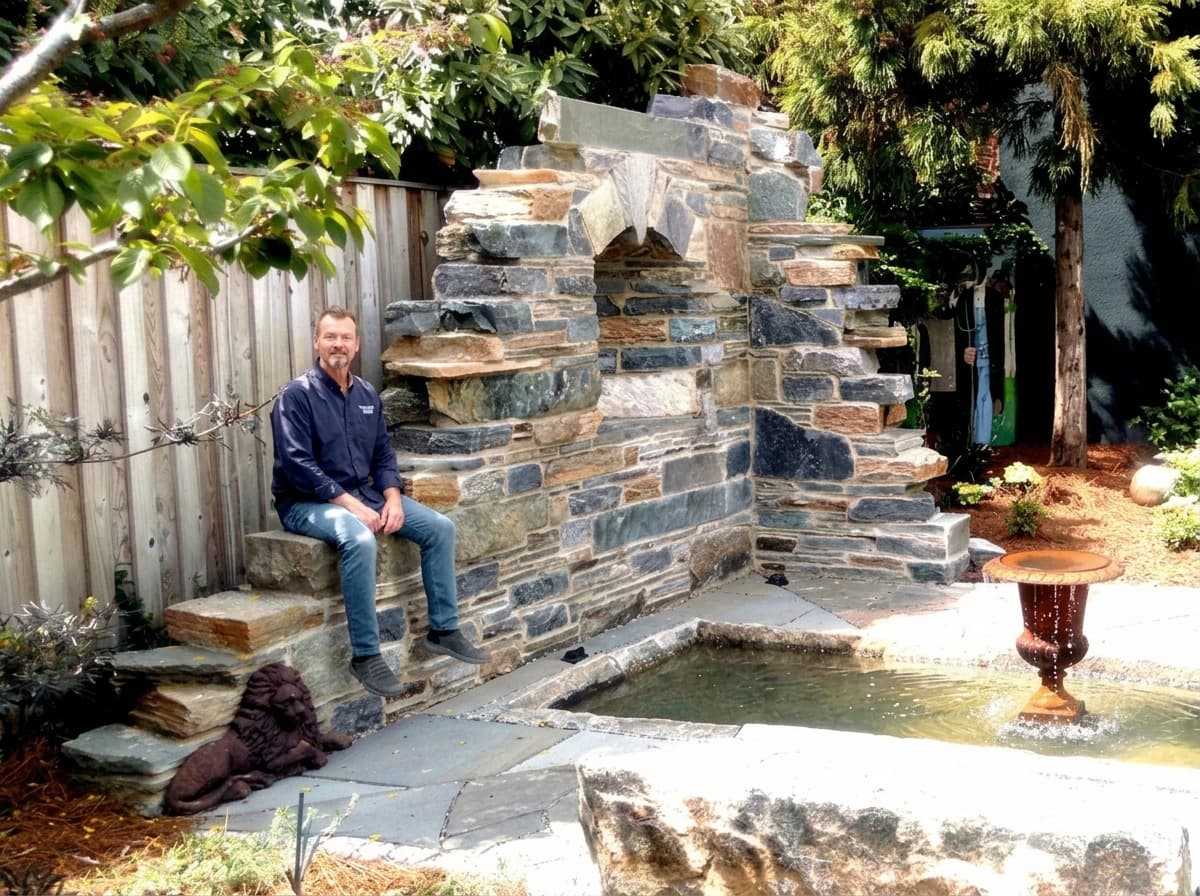
The Ruins
Federal Hill, Baltimore City, Maryland
My Client Asked Me, "What Do You See Here?"
I Stood There Looking at Their Normie Back Yard—Flowers, Mulch, a Gravel Walk, and a Wooden Bench—and Not Only Was There No There There, But I Felt Like, Given the Location, This Area Needed a Story.
Federal Hill is a High Ground Overlook of Baltimore's Inner Harbor—Important Early, and Relevant in the War of 1812, When It Served as a Military Observation Post, Signal Station, and a Gun Battery Looking Out Over the Harbor.
So When My Client Asked That Question, My Mind Didn't Stay in "Landscaping Mode," It Went Straight to: What Could Have Happened Here?
We'd Already Done a Couple Projects with These Clients in the Years Prior, So I Knew Something Important: They Were Open to "Cool and Wild," as Long as It Made Sense and Was Executed Well. That's Why I Didn't Rush It. I Spent a Couple Weeks Thinking—Pencil and Paper, Sitting in the Space, Staring at It from Different Angles—Because I Knew If I Could Come Up with the Right Idea, They'd Let Me Build It.
What I Saw
In My Mind, the "Backstory" Was This:
A Stone Munitions Structure—a Small Powder Store Connected to Harbor Defense—Stood on This Ground Back in That Era. Then a Stray Cannonball During the War of 1812 Found It and—Boom! What Remained Were the Wall Pieces That We See Today.
And Then—More Than 200 Years Later—the Present-Day Owners Didn't "Clean It Up," They Preserved the Ruins and Memorialized Them By Building Gardens and a Reflecting Pool Around Them.
Building the Ruins
The Finished Space Was Built to Feel Wild and Real, with:
- Bluestone Patios and a Walk
- Seating Placed Where You'd Naturally Want to Sit
- A Reflecting Pool
- A Rusting Urn with Overflowing Water
- And the Ruin Fragments Themselves—Built Like True Remnants
This Stone Has Baltimore in It
Much of the Stone Used is Reclaimed Granite—the Kind That Actually Spent a Previous Life of 150+ Years as Baltimore Street and Curb Stone.
As Streets Aged and Construction Techniques Modernized, a Lot of That Old Stone Got Ripped Out, and Much Discarded Into the City Dump. Can You Believe That—Valuable Granite, and Baltimore's History Dumped Like Trash?
A Few Local People Had Set Some Aside, Which We Salvaged and Used for the Build. Hopefully This Stone Will Live Another 150+ Years Right Here—Maybe a Couple Thousand!
That's Why the Finished Work Doesn't Feel Like "New Hardscape Pretending to Be Old." It Feels Like It Could Have Been There All Along—Like Baltimore Coughed Up One of Its Older Layers and Set It Down Carefully in the Present.
Why This Works
The Ruins Isn't a Replica and is Plausible and Real—and Now It is a Place That Makes People Sit and Wonder.
My Hope is That Decades from Now, Even Hundreds of Years from Now, People Will Still Stand There Looking at the Ruins and Say: "What is This? Where Did It Come from? What Happened Here?"
If You Want a Ruin of Your Own...
That Would Serve in the Real World as a Party Zone, a Quiet Morning Spot, a Zen Area, or a Fire and Whiskey Corner,Whatever Would Be Most Useful to You, Whatever We Can Imagine Your Own Personal Ruins Might Be, Let's Talk, and Throw Around Ideas.
I'll Happily Come Over to Your House, or Jump on a Video Call with You, Wherever You Are in the World, to Discuss Ideas.
The “Ruin” Concept Can Go a Hundred Directions, and It Can Be Purpose-Built to Suit Your Life's Needs. Your Ruin Could Be:
- The Remains of the Original Farmhouse That "Predates the Neighborhood," Where the Gnarly, Jagged, Broken Base of an Old Stone Chimney Becomes a Modern, Purpose Built, Working Wood-Fire Feature—Surrounded By Stone Floors with Intentionally Fractured Edges. What is It Today? Ultra Cool Party Zone That You Will Want to Live in, and Friends Will Want to Come Over and Have Fun in.
- A Gristmill Ruin Beside a Stream—Water, Stone, Moss, Worn Thresholds—Built to Feel Like It is All That Remains from an Early 1700's Real Gristmill.
- Something Along the Lines of a "Crumbling Roman-Style Bathhouse" That Could Feel Like It Has Been There for Centuries. Low, Arched Stone Walls Remain from What Once Formed the Bathhouse Rooms. Some Walls Stand Waist-High, Others Rise Taller, Broken Irregularly as If the Centuries Simply Took Their Toll. In the Ground Lie Half-Sunken Bathing Basins, Their Stone Edges Softened By Time. Clear Water Flows Gently Through Them, as If an Old Natural Spring Still Feeds the Baths. Small Channels Guide the Water from One Basin to the Next, Echoing the Way Roman Baths Once Circulated Water Through Different Pools.
Everything Appears Aged, Imperfect, and Naturally Deteriorated—Yet Beneath the Historic Look is a Fully Modern, Purpose Built System. The “Ancient” Baths Can Operate as a Hot Tub, a Plunge or Lap Pool, or Even Part of a Larger Swimming Pool Design. - A Ruin of Any Type That's Half Gathering Space, Half Sanctuary—Something You'll Use Constantly, and That People Will Talk About Forever.
And Yes—Done Right, This Kind of Work Can Dramatically Increase the Feel—and the Value—of a Property, Because It Creates Something That is So Far Beyond Ordinary That It is Truly Extraordinary; Something You Will Love for as Long as You Own Your Home, and Buyers Will Fall in Love with and Want to Have as Their Own.
If You've Got a Space and Want to Turn It Into a Place with a Past, You Can Call Now—I'd Love to Discuss Ideas with You.
Scott
Or DM Me Directly on X or WhatsApp